

Key takeaways
- Aim for a small, hot, clean-burning fire, not a big smoldering one.
- Keep the exhaust stack fully open and control the fire mostly with the intake and the size of the splits.
- Use dry, seasoned hardwood and add a split every 45–90 minutes, before the temperature drops.
- Look for thin, nearly clear "blue" smoke. Thick white smoke means the fire is starving for air.
How an offset smoker works
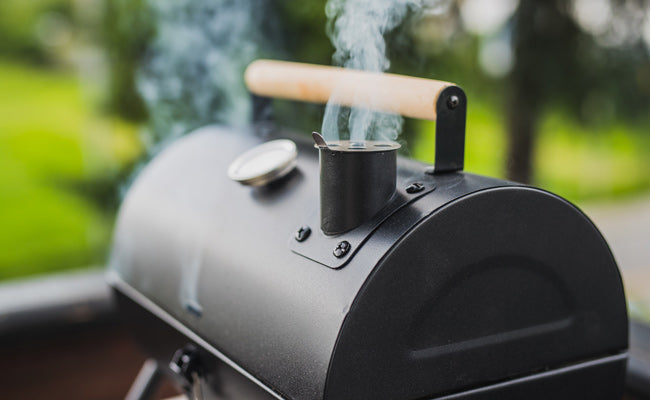
An offset smoker has a firebox attached to the side of a horizontal cook chamber. Heat and smoke flow from the firebox, across (or, on a reverse-flow pit, under and then back across) the meat, and out the stack. Because the fire is separate from the food, you get gentle, smoky heat for long cooks, but you are managing a live fire the whole time.
Starting the fire
- Open the intake damper and the stack fully.
- Light a chimney of charcoal and spread it in the firebox as a base coal bed.
- Add two or three small, dry splits on top of the coals and leave the firebox door cracked while they catch.
- Let the pit come up to temperature and settle for 30–60 minutes before the meat goes on. Steel needs time to heat through.
Controlling temperature
Most cooks target 225–275°F at grate level. Control the fire with three things, in this order:
- Fire size. Smaller splits added more often give steadier heat than big logs.
- Intake damper. Opening it adds oxygen and heat; closing it slows the fire. Avoid closing it so far that the fire smolders.
- Exhaust stack. Leave it wide open in almost all conditions so smoke clears quickly.
Choosing and adding wood
- Use seasoned hardwood that is well dried: oak, hickory, pecan, cherry and other fruitwoods are classic choices. Avoid softwoods and treated or painted wood.
- Splits about the length of the firebox and roughly wrist-thick catch quickly and burn cleanly.
- Warm the next split on top of the firebox so it ignites immediately instead of smoldering.
- Add a split when the fire starts to fade, typically every 45–90 minutes depending on the pit, the wood and the weather.
Common mistakes
- Choking the fire to lower the temperature (it creates dirty smoke). Use smaller splits instead.
- Opening the cook chamber too often. Each peek costs heat and time.
- Using green or wet wood.
- Not accounting for weather: wind, rain and cold pull heat from thin steel quickly.
How the pit itself helps
Heavy steel and good seals make every one of these steps easier. Thick plate steel (often 1/4 inch on serious pits) stores heat and smooths out swings, reverse-flow baffles even out temperatures from end to end, and insulated fireboxes extend the time between splits and improve cold-weather performance. If you are shopping, our charcoal grill and smoker buying guide explains the differences between offset designs.